Can Lack of Sleep Make a Dog More Anxious and Reactive?
Sleep loss lowers a dog's threshold for anxiety and reactivity. Learn normal variation, warning signs, and when rest changes aren't enough.
A tired dog is not being stubborn — short sleep lowers the threshold at which normal noise turns into barking, pacing, or snapping.

On this page
A 4-year-old, 52-pound mixed breed comes in after a long weekend of guests, late nights, and a hallway full of suitcases. By day three the owner reports the same dog who normally greets visitors with a loose tail is now barking at footsteps, pacing after dinner, and unable to settle in the crate. The choice on the table is familiar: correct the behavior harder, or treat the past three nights of broken rest as the reason the behavior changed. That fork — training problem or recovery problem — is where this question starts.
Check what I check first when reactivity tracks with poor rest:
- Total daytime rest vs. broken rest: naps interrupted every 20–30 minutes do not equal consolidated sleep
- Night pattern: waking, panting, repositioning, or needing to go out more than once
- Daytime threshold shift: barking, startle, mouthiness, or leash pulling that is new or sharper than baseline
- Recovery test: 48–72 hours of protected, quiet rest — does reactivity soften back toward normal?
- Medical flags: snoring changes, labored breathing, itch, pain on rising, thirst or urination shifts, or sudden behavior change in a senior
When tired looks like behavior trouble
Sleep pressure builds. A dog that cannot complete quiet cycles tends to respond faster and recover slower. Sounds seem louder, visitors seem more intrusive, and cues the dog knew seem to vanish.
That does not mean the dog forgot training. It means arousal is starting higher on the graph, so less input is needed to push the dog over threshold. Owners often describe it as edge, crankiness, or hypervigilance in the evening.
A short single-sentence reset helps here. Rest restores margin.
My job is to separate normal variation from the threshold that warrants an examination. A young dog missing sleep after travel, construction, a new baby, or a boarding stay and then returning to baseline with two quiet days fits common variation. A dog whose sleep remains fragmented despite a calm house, or whose reactivity keeps escalating, has crossed into a reason to seek assessment.
A week where more exercise made it worse
A 6-year-old, 38-pound cattle dog mix started lunging on evening walks after the family shifted to late-night fetch to “tire him out.” By three weeks in, the owner said walks felt electric: hard staring, barking at bikes, panting at midnight, then up again at 4 a.m. The tempting shortcut was to add more running and a calming chew and push through. We did the opposite for ten days — shorter morning sniff walks, no late arousing play, a dark bedroom crate with white noise, and a consistent lights-out time. By day 10 the midnight pacing had eased and leash reactions were shorter, though still present. The tradeoff was real: less fetch meant more daytime restlessness at first, and the owner had to tolerate slower progress before the dog’s threshold improved.
That pattern is typical. Exercise helps, but timed wrong it borrows from night sleep.
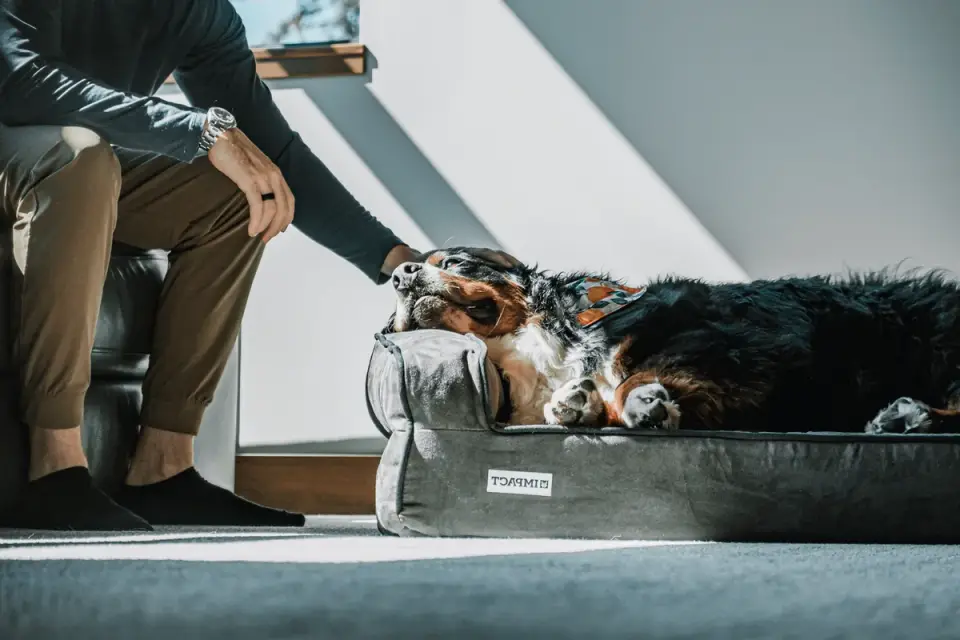
What fragmented sleep does to threshold
Dogs cycle between light sleep, deep sleep, and REM, much like people do, and interruptions matter more than total hours on a couch. Household noise, crate placement in a hallway, pain from arthritis, itch, gastrointestinal upset, or needing to urinate can splinter the night into short fragments.
When rest splinters, next-day regulation narrows. Startle increases. Impulse control drops. Learned coping — look away, check in with the owner, settle on a mat — becomes harder to access.
This is also where supplement claims need careful framing. Biomedicines notes in a review that “For the remaining species, evidence is derived mainly from preclinical studies or traditional use.” That sentence matters because calming herbs are often discussed as if canine data were settled. Cureus summarized human research differently: “A systematic review analyzed multiple RCTs and concluded that ashwagandha has a moderate positive impact on stress reduction and cognitive performance.” And Molecular Psychiatry described the narrow exception in its L-theanine review as “except for one study on psychotic anxiety (SMD = 0.54; 400 mg/day for 8 weeks)”. None of that proves a chew fixes sleep-driven reactivity. It explains why I treat rest, pain control, and routine as primary, and calming ingredients as secondary context to discuss with a veterinarian.
For related senior changes, owners often miss the overlap between night waking and daytime sleep shifts described in Why an Old Dog Sleeps Through Mealtimes Now and new thirst patterns covered in Why a Senior Dog Drinks More Water Than Usual.
The senior who slept all day and still reacted at night
A 12-year-old, 61-pound Labrador slept through most afternoons yet paced and whined from 11 p.m. to 2 a.m. for two weeks, then barked hard at small sounds the next morning. The owner wondered whether daytime naps meant total sleep was fine. It was not — daytime dozing had replaced consolidated night sleep, and pain on rising suggested hips were part of the cycle. We shifted the plan toward a veterinary exam for discomfort and nighttime needs rather than more daytime quiet time alone. Within a dated timeline, by day 14 after that exam and routine changes, night pacing bouts were shorter and morning reactivity was less sharp, though the dog still startled more easily than at age eight. The edge case changed the application: in seniors, more total sleep can coexist with worse function when night sleep is broken.
That is the counterargument I hear most: if the dog sleeps so much, how can lack of sleep be the issue? Because continuity counts. My position holds — protect consolidated rest first — but it bends for older dogs, where fragmented nights plus pain or cognitive change warrant earlier examination rather than a longer home trial.
How I would reset rest before retraining
Give the dog a predictable place to sleep, away from foot traffic. Keep wake, feed, walk, and bedtime within the same hour. End arousing play three hours before bed. Use a brief evening sniff walk or chew, then lights low.
Track it. Note bedtime, night wakings, morning mood, and reaction intensity for one week. If 48–72 hours of genuinely protected rest moves reactivity back toward baseline, you have your answer and you can resume training from a rested state.
Book an examination sooner if sleep stays broken despite quiet, if breathing, itch, limping, thirst, appetite, or house-soiling changes, if reactivity is sudden and intense, or if a senior shows night pacing with daytime dullness. Those are not training failures. They are medical thresholds.
Looking ahead, treat sleep as part of behavior care, not background noise. Rested dogs learn faster and forgive more.
Frequently asked questions
How much sleep does a dog need?
Needs vary by age and activity, but adults often rest 12–14 hours including naps, with puppies and seniors resting more. Continuity matters more than the total — repeated interruptions can leave a dog tired despite long rest.
What are signs my dog's reactivity is tied to poor sleep?
Look for a new, sharper threshold after noisy nights, travel, or schedule change — more startle, barking, pacing, or slow recovery — that softens after 2–3 nights of protected rest.
When should I call the veterinarian about sleep and anxiety?
Call if night waking persists despite a quiet routine, if breathing, pain, itch, thirst, appetite, or house habits change, or if reactivity is sudden, intense, or worsening in a senior dog.
Sources
- Chamomile evidence review — Biomedicines
- Ashwagandha systematic review — Cureus
- L-Theanine review — Molecular Psychiatry