What to Do When a Dog Barks Nonstop During Fireworks
Why some dogs bark through fireworks and others shut down, how to tell normal alarm barking from distress that needs an exam, and what to do in the moment.
Nonstop barking on the Fourth is usually alarm, not disobedience — and the job that night is to lower arousal, not to win a training argument.
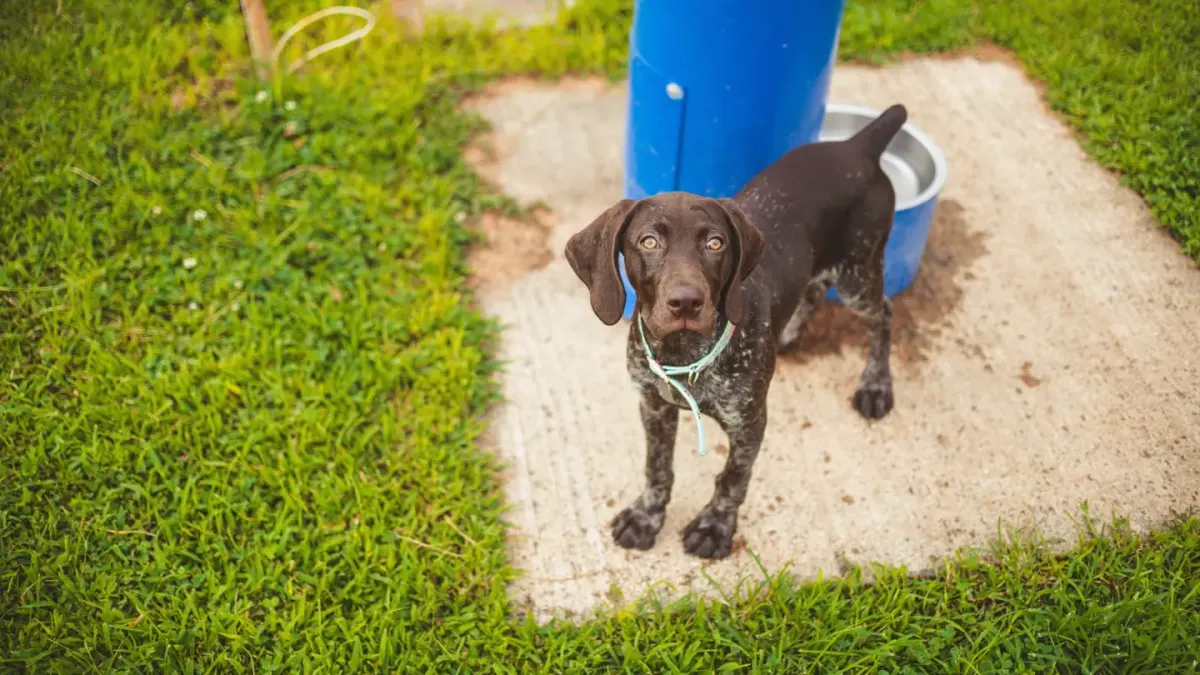
If your dog barks through every pop and boom, the first question isn’t how to stop the noise — it’s what kind of barking this is.
A dog that runs to the window, barks in bursts, takes treats, and checks back with you is showing a common alarm response. A dog that can’t be interrupted, paces, pants, drools, tries to bolt, or barks for an hour after the finale is past normal variation. That second pattern is the threshold that warrants an examination, because sustained panic can mask pain, hearing loss, cognitive change, or a developing noise phobia.
I keep that fork in mind on every fireworks call, because it changes what you do at 9 p.m. versus what you do on July 5th.
The 30-second check: alarm or overload?
Think contrast, not volume. Alarm barking still has pauses. Overload doesn’t.
Alarm looks like this: erect posture, forward ears, short barks tied to each boom, still responsive to name or a hand touch. Overload looks like this: fixed pacing, whining mixed into barking, dilated pupils, panting when it’s not hot, hiding then bursting out again, no interest in food or a known cue.
If you see overload, don’t correct it. Lower input first — move away from windows, close curtains, add steady background sound, offer a chew or lick mat only if the dog will take it. If the dog won’t disengage at all, that’s information. Write down when it started and what helped, even a little.
She was a 4-year-old, 52-pound mixed breed, the kind of dog who normally loved the backyard at night. That July 4th her owners set up blankets on the deck to watch the neighborhood show, thinking company would help. By the third volley she was at the fence barking without breaks, hackles up, ignoring cheese she always took. They tried calling her inside, then scolding, then comforting in rapid succession. Nothing broke the loop until the husband carried her to the laundry room, shut the door, and ran the fan. She kept barking for three weeks in memory — no, for 40 minutes straight — then finally lay down panting. The number that mattered wasn’t the decibels. It was 40 minutes without a reset, which moved her from my “common alarm” column to my “let’s talk this week” column.
What actually helps in the moment
You can’t train during a barrage. You can manage arousal.
1. Shrink the world. Bring the dog to the smallest, most familiar interior room. Close windows, draw shades, turn on a fan, TV, or white noise. Less visual flash means fewer restart triggers.
2. Give the mouth something else to do — if wanted. A frozen Kong, Toppl, or lick mat helps some barkers because licking and chewing compete with barking. If the dog sniffs and walks away, don’t push it. Appetite loss during panic is common, not defiance.
3. Stay boring and predictable. Sit nearby, speak low and slow, keep petting rhythmic if the dog seeks contact. Avoid alternating between “no!” and “it’s okay baby” — the swing keeps arousal up.

What doesn’t help, even though it’s tempting
Yelling “quiet” adds sound to sound. Spray bottles, shaker cans, and leash pops add startle to startle. They may pause barking for three seconds and make the next hour worse, because the dog now links booms with punishment from you.
That’s the shortcut that misses the underlying question: is this dog choosing to bark, or unable to stop?
He was a 9-year-old, 68-pound Labrador who had been quiet for eight previous Fourths. This year he barked from the first distant thump, paced between the front door and the kitchen, and drooled on the rug — new for him. The owner assumed stubbornness and tried a citronella collar a neighbor lent him. The barking stopped for about two minutes, then returned louder, with attempts to push through the baby gate. By day 10 after the holiday he was still startling at trash-can lids. The failed approach here wasn’t cruel intent; it was treating a new, age-shifted response like a training gap. When an older dog changes pattern that fast, I don’t reach for a stronger consequence. I reach for an exam to check pain, hearing, and cognition before any behavior plan.
Where supplements and herbs fit — and where they don’t
Owners often ask about chamomile, valerian, ashwagandha, or L-theanine on fireworks night. Here’s how I frame the evidence without overpromising.
Traditional herbal care has a long history here: “Chamomile and Valerian Root have been used in traditional herbal care to support relaxation” is how one MDPI review context reads, with the important qualifier that “For the remaining species, evidence is derived mainly from preclinical studies or traditional use.” In other words, plausible for calm support, not proof it stops panic barking in dogs.
For ashwagandha, “A systematic review analyzed multiple RCTs and concluded that ashwagandha has a moderate positive impact on stress reduction and cognitive performance” in that Cureus review — again, general human data, not a fireworks-night dose for dogs. For L-theanine, one Molecular Psychiatry review noted “except for one study on psychotic anxiety (SMD = 0.54; 400 mg/day for 8 weeks),” which tells you how narrow and human-specific that dosing literature is.
So I don’t start a new chew at 8 p.m. on July 4th and expect quiet. If you want to try a calming supplement, trial it on a calm week, watch for stomach upset or sedation, follow label directions, and tell your vet what you’re using — especially if your dog takes behavior medication.
For broader context on how supplement claims age, I point owners to Anti-Aging Pills for Dogs: What the Evidence Actually Supports and At What Age Should a Dog Start a Longevity Supplement?. The habit is the same: separate marketing from mechanism.
An edge case that changes the plan
Not every nonstop barker is anxious. Some are aroused and having fun.
She was a 2-year-old, 38-pound cattle-dog mix who barked, spun, and chased reflections with each flash — tail up, play-bows between volleys, grabbing a toy and shoving it at her owner by day 3 of the neighborhood shows. No panting, no drool, slept hard afterward. That dog didn’t need sedation; she needed management so the habit didn’t harden — curtains closed, a pre-show tug session at dusk, then settle on mat with rewards for quiet seconds. If I’d labeled her panicked and confined her, I’d have created frustration barking on top of alarm barking. Same sound to a neighbor, different interior state, different plan.
That’s why I video 30 seconds if it’s safe to do so. Posture and recovery tell you more than volume.
When to book the exam
Call your regular vet promptly if you saw escape attempts, self-injury, drooling or trembling that outlasted the noise by more than an hour, loss of bladder control, or any new aggression when handled. Also book if this was a sharp change for a senior, if barking now generalizes to thunder or traffic, or if you needed to consider prescription help to get through the night.
You don’t need to wait for the next holiday to address it. Desensitization and counter-conditioning work best in the off-season, in short sessions, with recorded sounds at low volume paired with food — and with pain or medical triggers ruled out first.
So where does that leave you for the next show? Manage the room, not the bark. Protect sleep, limit rehearsal, take notes.
And then ask the question that actually moves things forward: did my dog recover — or did the barking recover him?
Frequently asked questions
Should I punish barking during fireworks?
No. Punishment may pause barking for seconds but often raises fear and makes the next boom harder. Reduce triggers, move to an interior room, and reward brief quiet moments instead.
Will a calming chew work if I give it right before the show?
Don't expect a first dose at 8 p.m. to stop panic barking. Any supplement should be trialed on a calm day, used as directed, and discussed with your vet, especially with other medications.
When is fireworks barking an emergency?
Seek prompt care for escape attempts that risk injury, overheating from prolonged panting and pacing, repeated vomiting or diarrhea, or barking with disorientation in a senior dog.
Sources
- Biomedicines review on chamomile — MDPI
- Systematic review of ashwagandha — Cureus
- L-theanine anxiety review — Molecular Psychiatry