Why a Dog Favors One Back Leg When Walking
A calm, step-by-step guide to why dogs favor one hind leg — common causes, what to watch, and when to book an exam.
Why your dog favors one back leg when walking usually comes down to pain, injury, or joint stiffness.

On this page
If you’ve noticed your dog favoring one back leg on walks, start with this distinction: brief, even favoring after rest or play is often variation, while repeated or worsening favoring points toward pain that deserves an exam.
Quick decision checklist — watch for 2–3 days, act sooner if flagged:
- Which leg, and when: left vs. right, first steps vs. mid-walk vs. after rest
- How it looks: toe-touching, skipping, stiff stride, sitting out one leg, reluctance on stairs
- Pain clues: yelp, licking one knee or ankle, swelling, heat, reluctance to be touched
- Change over 48–72 hours: steady improvement vs. flat vs. worse
- Red flags — book promptly: non-weight-bearing, sudden severe lameness, swelling after trauma, loss of appetite or energy, back pain or dragging
- What helps assessment: short video from the side and behind, note of surface and distance before favoring starts
That list changes the decision because it separates a passing hitch from a pattern.
The morning it becomes concrete often looks ordinary. A 7-year-old, 62-pound mixed-breed trots to the corner without issue, then shortens the step on the right hind leg on the way home and sits with that knee kicked out while you unlatch the gate. By day 3 the pattern is clearer: sound for the first block, toe-touching by the second, then normal again after a nap. That on-off timing does not rule out joint or soft-tissue pain — it describes how many dogs offload a sore hind leg when it is tired or stiff.
The check I use to separate variation from a reason for an exam
Normal variation is symmetric, brief, and self-correcting. A dog may pace oddly on slick floors, take a few stiff steps after a long nap, or shift weight when tired, then move evenly again. The stride length stays close side-to-side, the dog still loads both hind legs to stand, climb, and turn, and there is no swelling, heat, or behavior change.
The threshold that warrants an examination is asymmetry that repeats. Favoring the same hind leg across days, shortening the same stride, skipping on the same leg at a trot, bunny-hopping, difficulty rising, or stiffness that lasts more than a few minutes after rest all point past variation. I pay special attention when the dog unloads one leg to stand, avoids stairs it once took, or needs a shorter route.
One short reset helps here. Video beats memory.
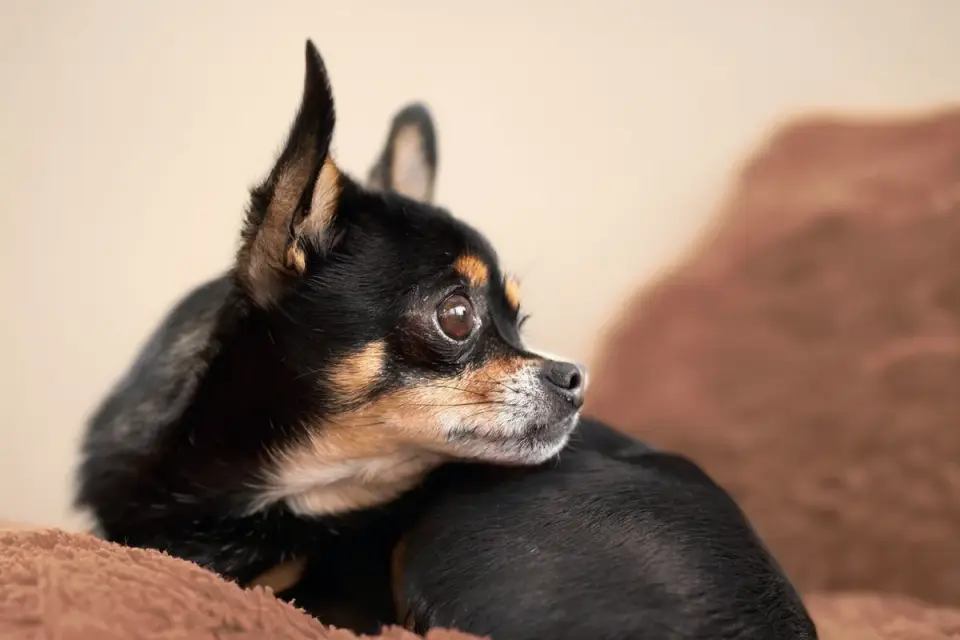
Why one hind leg gets favored
A hind-leg lameness means the dog is reducing load on painful or unstable tissue. Common drivers include cranial cruciate ligament injury, patellar luxation in smaller breeds, hip discomfort, hock or toe injury, muscle strain, a torn nail or pad cut, and age-related joint stiffness. Nerve or spinal issues can also alter hind-leg gait, which is why dragging, knuckling, or weakness in both hind legs deserves prompt attention rather than home monitoring.
Joint tissues themselves explain part of the stiffness owners see after rest. Cartilage, synovial fluid, and surrounding soft tissue work together to let the joint glide, and researchers continue to study how support ingredients interact with those tissues. For example, chondroitin has been described in peer-reviewed work as an ingredient that “supports healthy synovial fluid homeostasis,” according to Frontiers in Veterinary Science. That phrase describes fluid balance, not pain relief, and it does not diagnose your dog.
Other joint ingredients are studied at the tissue level. In laboratory work, glucosamine HCl was reported to “prevent experimentally induced cartilage degradation in vitro,” as published in the Journal of Veterinary Medical Science. Green-lipped mussel components have also been studied in preclinical models, where “BMO, GMO, and KO all alleviated paw swelling in rats and reduced serum levels of rheumatoid factor (RF), anti-cyclic citrullinated peptide (anti-CCP) antibody, and pro-inflammatory cytokines such as TNF-α and IL-17,” according to Nutrients. Those are laboratory findings, not proof a chew will fix a limp.
That context matters if you already use joint nutrition. For background on how owners compare options, see Turmeric vs Glucosamine for Dog Joint Pain: Which One Actually Helps? and What Is CoQ10 and How Does It Support Aging Dog Heart Health.
The tempting shortcut that misses the question
Rest plus a supplement is the approach I see backfire most. A 5-year-old, 48-pound border collie mix starts skipping on the left hind leg after fetch, rests for three weeks, moves better, then skips again the first weekend back to full sprints. The owner reads that as proof rest worked and adds a joint chew. By week six the dog is still sound at a walk but skips at a trot, and the underlying pattern — likely a partial cruciate issue or patellar instability — never got assessed.
Rest can calm irritation, and consistent joint nutrition has its place in a long-term plan, but neither answers the mechanical question: is the knee stable, is the hip comfortable through range, is the foot intact, is the gait neurologic? Without that answer, rest just resets the clock.
I don’t dismiss joint support. I place it after diagnosis, matched to the joint involved and the dog’s weight, age, and activity.
An edge case that changes how I apply this
Not every one-sided hind-leg change is orthopedic. A 10-year-old, 71-pound senior dog favors the right hind leg for two mornings, then you notice the toenails on that foot scuff on pavement and the dog stands with that foot slightly knuckled. That scuffing shifts my concern toward nerve or spinal involvement rather than simple stiffness, even though the first sign looked like favoring. Timeline matters here too: by day 10 with no steady improvement, or any progression to weakness, dragging, or incontinence, waiting longer is the wrong call.
Other edge cases include a swollen hock after a misstep, a pad cut that only shows at a walk on concrete, and bilateral hip stiffness that looks one-sided because the dog always leads with the same leg. Video from behind often reveals what side-view misses.
When to book, what to bring, and what happens next
Book an exam if the same leg is favored for more than 2–3 days, if lameness is moderate or worse, if there was trauma, if swelling or non-weight-bearing appears, or if behavior, appetite, or energy shifts. Bring your checklist notes, the videos, and a list of medications and supplements.
Expect a hands-on orthopedic and neurologic exam, gait observation, palpation of hips, knees, hocks, and feet, and often radiographs. Treatment follows the cause — activity modification, rehabilitation, weight management, pain control, or referral for surgical conditions — not the limp alone.
Your next step is practical: leash-walk short distances on even ground, avoid sprinting and stairs until assessed, check nails, pads, and between toes, and do not start human pain medication. If favoring fades within a day and never returns, note it. If it repeats, let the pattern make the call.
Frequently asked questions
Why does my dog favor one back leg only after getting up?
Brief stiffness after rest can reflect joint stiffness or soreness, especially in seniors. If it lasts more than a few minutes, repeats daily, or involves the same leg, have it assessed rather than assuming age alone.
Should I rest my dog if he is skipping on one hind leg?
Short-term activity reduction for 48–72 hours is reasonable for mild, stable favoring with no red flags. If skipping persists at a trot, worsens, or returns with activity, book an exam to check knee stability and hips.
Can a paw injury cause hind-leg favoring?
Yes. Check nails, pads, and between toes for cuts, swelling, heat, or a torn nail. Foot pain often looks like joint lameness at a walk.
Sources
- Synovial Fluid Homeostasis Study — Frontiers in Veterinary Science
- Glucosamine Cartilage Study — Journal of Veterinary Medical Science
- Mussel Oil Anti-Inflammatory Study — Nutrients